
Marine steam generators: types and industrial applications
When discussing steam generators – and, more generally, when delving into the specifics of industrial systems – special mention must, quite rightly, be made of the marine sector.
It is rare for marine applications of steam generators to be entirely electric. To achieve maximum efficiency in production, hybrid systems are used. Garioni Naval has recently installed a major system of this type on the P310 hybrid ferry, built in Gdynia, Poland, by the Crist shipyard, and designed to tackle the challenging waters of the Baltic Sea. The P310 combines an electric system with a steam engine.
Another significant installation by Garioni Naval is the one fitted to the steamship Concordia. During its latest refurbishment, completed between 2013 and 2015, the company installed a marine steam generation system in its engine room.
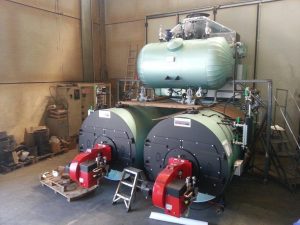
Figure 1: Shipyard facilities used in the restoration of the steamship Concordia. Built by Garioni Naval, part of the Svecom-P.E. group.
What are marine boilers used for?
Steam has a wide range of uses. Depending on the type of operation and its fuel source, a steam generator can serve various purposes on board a vessel.
A marine boiler produces steam that can be used for numerous tasks on board the ship. In some cases, the steam itself acts as the driving force that powers the ship’s engine. However, its potential uses are far more numerous.
- The most common function is the management of the ship’s auxiliary services. These ensure the ship’s habitability by providing heat to the living quarters, producing domestic hot water, and supplying shipboard kitchens and washing systems. On long-haul ferries or cruise ships, consumption for these purposes is extremely high. On vessels of a similar size, steam generators are connected to complex heat distribution systems to adequately meet the numerous internal requirements.
- A second use of steam is to heat and maintain the temperature of the fuel oil used in marine engines. This fuel is highly viscous and needs to be heated before it can be pumped and burned. If there were insufficient heat, the fuel’s viscosity would make it impossible to pump.
- On commercial vessels, steam is sometimes used to wash the tanks. This is done using heated seawater. To bring it up to temperature, the primary heat from the marine steam generator is utilised.
- In the case of large vessels with a rather specific purpose, such as oil tankers or chemical tankers, it is not enough simply to heat the fuel oil; steam must also be used to transfer heat to the cargo, in order to maintain its fluidity. This applies during navigation, of course, but also and above all during loading and unloading. For this type of service, as an alternative to a steam generator, it is possible to opt for a system with diathermic oil boilers, depending on the manufacturer’s design choices.
Whilst sailing, so-called bilge water collects at the bottom of the hull. This is a mixture of waste, fuel oil, lubricants and water. Given its composition, the ship’s bilge is also usually heated, using steam or thermal oil, to prevent bituminous deposits and allow for easy draining as well as any necessary treatment, thanks to the action of the heat generator.
Steam generators in historic vessels and Garioni Naval’s expertise
On vessels used for cultural or ceremonial purposes, the use of a steam generator takes on added significance. On these vessels, the marine boiler very often, if not always, plays a direct role in propulsion, as the steam drives a steam engine which turns the propeller and, in effect, enables the vessel to sail.
On 19th-century steam vessels, coal-fired marine boilers were commonly used. Today, in modern vessels, other fuels are used for marine steam generators: heavy fuel oil, naphtha or MGO, a low-viscosity, low-sulphur diesel. Many port authorities have made this blend mandatory, given its lower environmental impact.
It is possible to keep marine boilers operational by replacing obsolete and polluting models with new, efficient steam generators. The work carried out by Garioni Naval on the Concordia was precisely this kind of refurbishment. The aim was to continue providing heat to a jewel of Italian shipping.
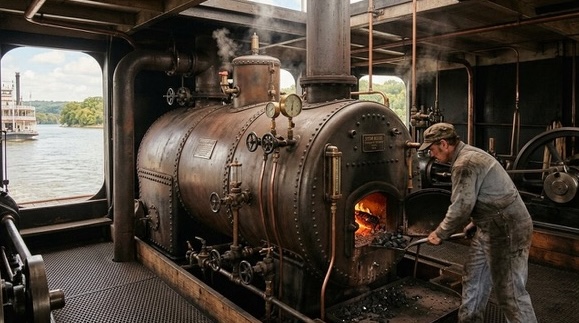
The picture shows an old, restored steam boiler in the engine room of a 19th-century steamship.
Interested in a professional system?
Our experts are here to help!
Marine safety is not an option
Marine steam generators, like their land-based counterparts, can be divided into two categories depending on their design: water-tube and fire-tube types.
The choice of mechanical components and equipment on board cannot be overlooked. It is often this very aspect that sets successful naval projects apart. The two Garioni Naval installations we have written about, and which we are about to examine in detail, fall within this definition. In particular, on the Concordia, we had to pay special attention to this aspect when installing the marine steam generator. This was inevitable, given the steamship’s history.
On the P310 hybrid ferry, we installed a boiler with an MGO burner and electric heating elements that act as auxiliary heating. The water pumping unit is a twin-pump system, and the generator enables the ferry to carry passengers (up to 372 on board) and 90 vehicles.
As for the Concordia steamship, which has celebrated its 100th anniversary, we have carried out a conservation restoration and technical modernisation. The refurbishment involved the installation of two three-pass steam generators and a system comprising a through-fire furnace and a wet bottom. The system also includes an economiser, which serves to reduce consumption, and a superheater. The steam generator installed is a fine example of how innovation can be put to use on vessels rich in history and heritage.
The two marine boilers fitted to the vessels are of different types and capacities. The operator of the P310 is a Finnish shipping company, which asked us for a boiler capable of providing power, heat and managing a ferry operating in the cold waters of Scandinavia. The Concordia, on the other hand, is operated by Gestione Navigazione Laghi and sails on Lake Como.
Certifications and updates
Quality certifications for marine steam generators and industrial boilers are issued by specialist bodies and companies.
With regard to the system in use on the P310, boilers and pressure vessels are designed, fitted, tested and certified in accordance with DNV regulations for ships and offshore structures. The certification of the generator, pressure parts and safety systems on the Concordia, however, was carried out by RINA, the Italian Register of Shipping.
Garioni Naval is a DNV and Bureau Veritas certified company. All our installations comply with the high standards of the naval classifications and certifications issued by these two bodies, which are recognised and accepted internationally.
The certifications comply with the MED (Marine Equipment Directive), which is fundamental for marine equipment installed on board vessels of the European Union or EFTA countries, namely Norway and Iceland, ensuring that the generators comply with the latest updates to maritime safety standards. The international SOLAS Convention, which stands for Safety of Life at Sea, establishes and regulates safety at sea (hence the name) and defines the minimum requirements for all installed marine equipment, including boilers and heat generators.
Garioni Naval’s Projects
Garioni Naval’s projects, whether in the naval or industrial sectors, are at the cutting edge of technology and are always designed in collaboration with the client, following an initial phase of carefully listening to their requirements.
Alongside marine steam generators, such as those fitted to the P310 and the Concordia described above, we have also produced industrial boilers and powerful, functional heat generators, such as the reliable VPR 500 system or the heat recovery steam generator installed in Slovenia. This is a compact and efficient solution, operating for 8,000 hours a year. It can save the equivalent of 265,800 standard cubic metres of natural gas, preventing the emission of 511 tonnes of carbon dioxide every twelve months. These savings are due to the installed marine steam generator and its advanced technology.
Among the refurbishments we have undertaken, we also include that of the steamship Piemonte, which has been sailing the waters of Lake Maggiore since 1904, and from 2025 will do so thanks to a Garioni Naval heat generator certified by RINA.
Interested in a professional system?
Our experts are here to help!

