
Boiler retrofits: how and why to upgrade an industrial heating system
When we talk about the revamping of industrial boilers, we are referring to a precision refurbishment aimed at upgrading the entire system. In other words, revamping involves carrying out a technological modernization of obsolete, poorly performing, or non-compliant boilers.
Revamping can be carried out by replacing worn-out boiler components and upgrading the control system. Doing so increases efficiency and safety, reduces emissions from the steam-generating system or the industrial boiler, and secures European CE certification in accordance with the requirements set forth by Brussels regulations—all without incurring the high costs and extended lead times associated with completely replacing the boiler with a new installation. These costs can in fact be substantial, especially in the case of boilers of considerable size and power, perhaps dating back several decades.
All the benefits of upgrading industrial boilers
The retrofitting of an industrial boiler is an effective solution for all companies that wish to continue operating in compliance with new regulations while maintaining a high level of productivity. The most recent Brussels regulation concerning pressure equipment—which includes industrial boilers and steam generators—dates back to 2025 and updates the framework of the PED (Pressure Equipment Directive), which has been law since 2014 and took effect in 2020. It also provides for the possibility of carrying out a revamping project.
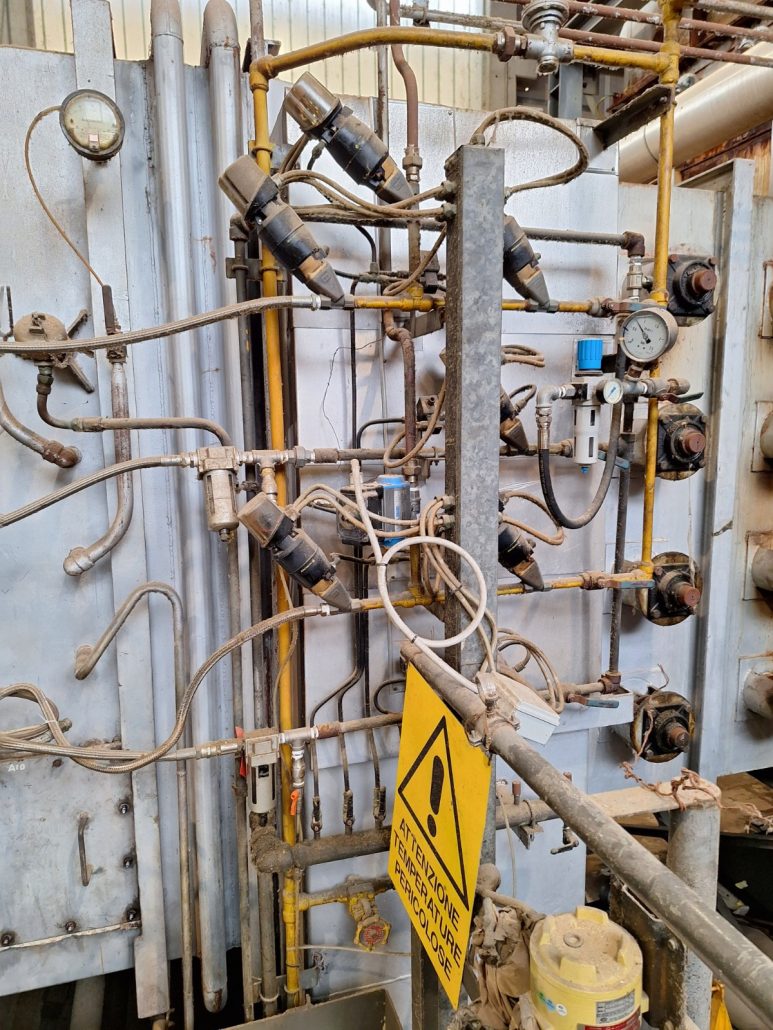
Boilers, steam generators, and burners, which are subjected to intense and continuous use, are prone to wear and technological obsolescence. Upgrading these systems with modern, cutting-edge technologies through revamping allows them to be modernized—that is, to improve their performance and extend their useful life.
Opting for a solution like revamping is quite advantageous—both economically and operationally—as it allows for optimizing efficiency, reducing emissions, and increasing the operational safety of boilers. All of this comes at a significantly lower cost compared to replacement.
When a boiler no longer performs as it used to, delivering a much lower efficiency rate, the first thought is to purchase a new one. It is not uncommon, however, for such a purchase to involve very high costs—costs that may even be impossible to cover at that moment. In these cases, one can opt for boiler revamping, which represents a significant cost but is still lower than that of a new purchase;
Technical work planned for the revamping of boilers and steam systems
Under current regulations, a boiler—whether on land or at sea—must be equipped with redundant and certified safety systems. All of the following are required:
- Water level control. Electronic, independent, and self-diagnostic level sensors must be installed, capable of providing prompt warning if the amount of fluid in the boiler falls below a certain threshold.
- Flame monitoring: burners must be equipped with self-monitoring flame control devices capable of signaling when the flame goes out.
- Shut-off devices: shut-off valves and additional safety devices, such as pressure switches and boiler shut-off thermostats with manual reset, must be installed.
- It is mandatory that the boilers’ electrical control panel be subject to supervision: the integration of dedicated programmable logic controllers (PLCs) for safety purposes is required, in addition to remote monitoring systems capable of sending alarms—via SMS or Ethernet—to a designated supervisor in the event of a malfunction.
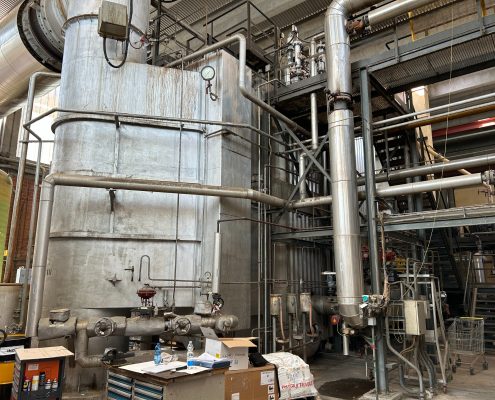
There are numerous tasks to be performed, but they are necessary to ensure compliance with the latest safety regulations for boiler systems;
The benefits of revamping
Boiler retrofitting improves energy efficiency by replacing old burners and installing inverters or economizers on the pumps. This not only brings outdated systems up to code—bringing them into line with the latest safety standards and ensuring full regulatory compliance—but also reduces boiler operating costs, especially for steam generators, for which a 72-hour exemption may be obtained;
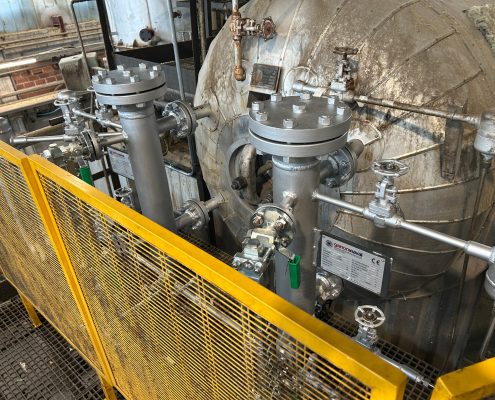
What is the 72-hour exemption and how does it work?
The 72-hour exemption for the steam generator operations supervisor allows the facility to mitigate what is likely the most stringent requirement of the aforementioned European regulation. The measure requires maintaining active, continuous supervision to monitor the systems without interruption, ensuring that there are no issues with their operation. Being able to exempt the technician for up to 72 hours drastically reduces personnel costs.
The law would otherwise require every company to have a boiler operator stationed next to the steam generator 7 days a week. The exemption reduces this number of hours, requiring the technician’s presence only two or three times a week, at 72-hour intervals. This operator is required to inspect the machine, verify that everything is safe by checking the control panel, and ensure that no maintenance is needed. If all checks are satisfactory, the operator may be absent for another three days before returning to perform the same checks.
In Italy, the exemption from continuous operation is regulated by the UNI/TS 11325-3 standard and by the aforementioned PED directive concerning boilers and steam-generating systems.
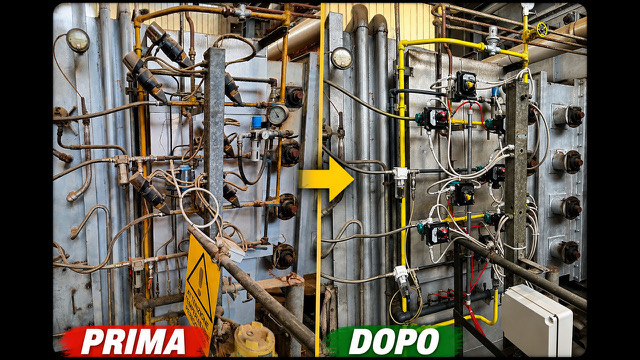
The revamping process transforms an obsolete boiler into a smart, automated system. It does so with cost-effectiveness in mind: the renovation and retrofitting of industrial boilers are less expensive—and faster—for those who choose revamping over complete replacement.
If you use a steam generator in your company or ironing facility and need to bring it into compliance with recent regulations, a revamping upgrade may be right for you, as it will allow you to manage of the 72-hour exemption, thereby saving on labor costs and employee hours.
Interested in a professional system?
Our experts are here to help!

